Have you ever wondered where public relations could take you? Imagine addressing an issue head-on that impacts Iowa farmers directly. Start with identifying audience perception, influencers' chatter online, journalists' coverage of the issue and food industry marketing that perpetuates the issue. Take all that into consideration then build a communication campaign that helps consumers sort through misinformation and feel confident about their food decisions. Sounds easy, huh?
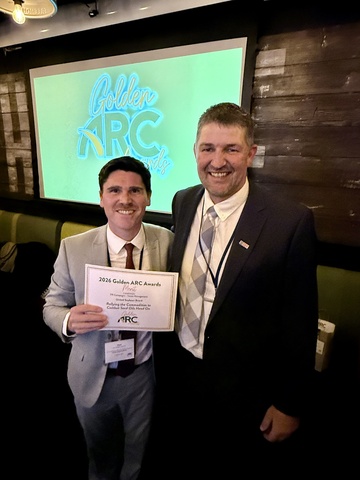
University of Iowa SJMC alumnus Paul Murphy-Spooner (BA 2011 School of Journalism and Mass Communication, Communication Studies) in his role at United Soybean Board recently won a PRWeek award for the Best in Data Application category against Clorox, IBM and Vaseline (Unilever). Often referred to as the “Oscars of PR,” a PRWeek Award signals true industry leadership and the highest caliber of strategic communications. Read more here about his submission: “U.S. Soy Conquering the Seed Oil Scaries: A Science‑Backed Cure for Confusion.”
As you explore career options, issue management and crisis communications as a specialty is becoming more and more relevant (take Olivia Pope in the TV drama Scandal for example). We're in the age of AI disinformation, polarized politics and partisan issues, extreme weather events, food recalls, and don't forget the internet trolls. A crisis manager responds to these external pressures, protects a company's reputation and coaches the CEO and senior leadership on how to address controversial topics.
This may seem like an advanced skill that's learned later on in your career. However, as you pursue an emphasis within the journalism field, specifically public relations, the scope of roles is vast. PR encompasses content strategy, media relations, digital and social media, thought leadership, stakeholder relations, media planning, brand reputation and account service. Issue management and crisis communications is also in the mix, and if you have an understanding of the field, that alone makes you marketable for entry-level positions and elevates your conversation in an interview setting.
So where do you start and dig in to enhance your acumen in this area? A case study on seed oils may be a good start.
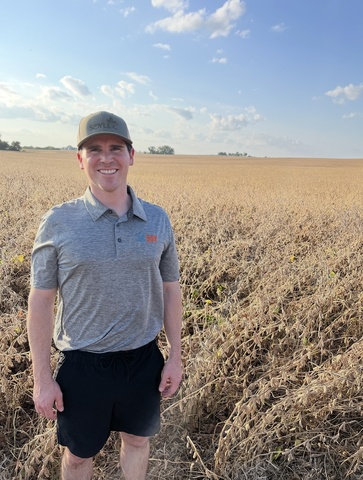
UI SJMC alumnus Paul Murphy-Spooner served as senior director of external communications for United Soybean Board, an organization that grows soy demand on behalf of the 500,000 U.S. soybean farmers. In this role overseeing issue management and tracking conversations about vegetable oil, he started seeing significant pickup on anti-seed oil rhetoric and conversations happening with fringe audiences about four years ago. There wasn’t really a strong pro-seed oil perspective based on the science to counter this narrative about toxicity, inflammation and obesity.
Murphy-Spooner's response strategy was to launch a campaign, but first, focus on building a scientific foundation. U.S. Soy partnered with the corn and canola commodity groups to develop a peer-reviewed manuscript examining the health benefits of seed oils. This topic continued to gain momentum as Robert F. Kennedy Jr. was appointed the U.S. Secretary of Health and Human Services. His Make America Healthy Again initiative encouraged consumption of saturated fats (butter and beef tallow) instead of unsaturated fats (vegetable oils). This countered organizations like American Heart Association and the World Health Organization that recommend seed oils as good sources of fat.
Meanwhile, Google searches for “are seed oils bad for you?” increased by 900 percent over this time period, and the #SeedOils hashtag generated more than 8 million engagements across TikTok and Instagram.
So, in response, United Soybean Board launched a digital Seed Oil Hub to centralize research and answer common consumer questions on the topic. The website anchored various public relations tactics including Google Ads, influencer partnerships with registered dietitians and national media including placements in New York Post, CBS News, EatingWell and Men’s Health.
This is one example of issue management in response to a reputational threat that could have significant ramifications to U.S. soybean farmers and their edible oils market. But other crisis communication case studies worth looking into include:
- Chicago Tylenol murders in 1982 and Johnson & Johnson's decisive action to recall 31 million bottles of Tylenol and introduce tamper-proof packaging.
- San Diego's first major mass shootings at McDonald’s in 1984 and the swift response for victims' families and McDonald's donating $1 million to the survivors' fund.
- BP's Deepwater Horizon oil spill in 2010 and Dawn dish soap capitalizing on the opportunity to rescue birds and other wildlife coated in petroleum.
Another way to level up in this area is to take Kylah Hedding's crisis communication class offered by the SJMC. Or join Iowa's Public Relations Student Society of America chapter. Also, check out the Issue Management Council for background on how this field originated.