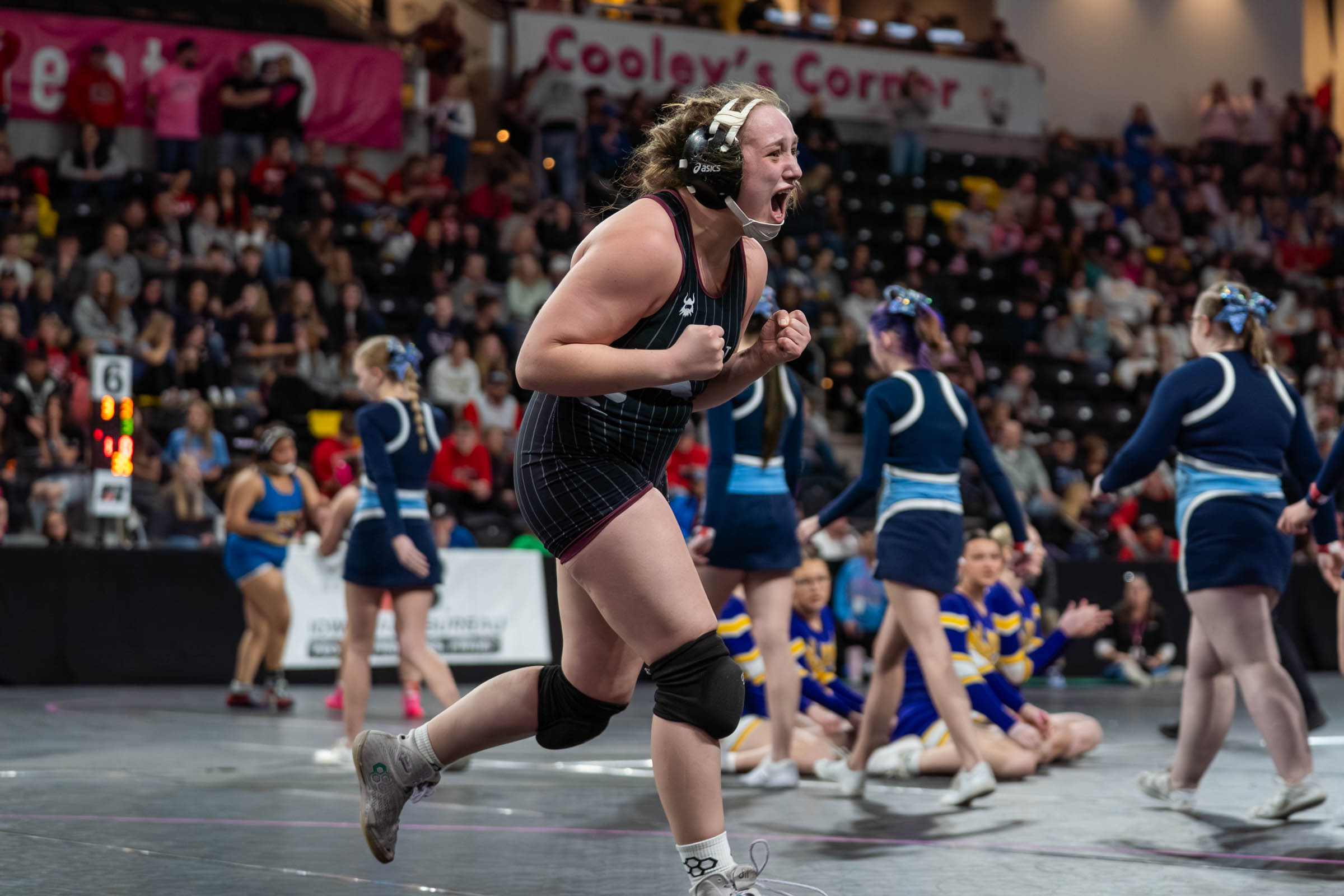
For the first time since the course was introduced in 2024, students in JMC and SMC’s Prep Sports Report class covered this year’s Iowa High School State Athletic Association’s (IHSAA’s) state wrestling tournament.
The course—taught by Visiting Associate Professor of Practice and former ESPN journalist Wayne Drehs—simulates a professional sports department by prioritizing hands-on reporting over classroom instruction. Students are encouraged to immerse themselves in the communities they cover and regularly attend local sporting events.
Generally, students are responsible for covering Eastern Iowa high school athletics, including in Lisbon, Solon and Mt. Vernon. However, the Spring 2026 class was unique in that it kicked off with covering the girls and boys state wrestling tournament.
Megan Heine, a second-year SJMC student and the president of the Association of Women in Sports Media club, said sports have always been a part of her identity. As someone who grew up in a sports-heavy, competitive household, Heine knew she wanted this interest to carry over to her professional life.
At the state wrestling tournament, Heine was responsible for covering both the girls and boy’s matches. Whereas other students joined her as photographers, Heine’s main task was to craft articles based on her observations and interviews.

For Heine, the most memorable experience she gained from reporting on the tournament was following the story of Gracie Pinckney: A Mt. Vernon senior who made it to the final round for the first time in her high school career.
“Just following her story and even what her coaches had to say…I talked to her dad afterwards too because she ended up winning the state title,” she said. “Following that story was really cool to do."
Alongside Heine, SJMC senior Aidan Wirtz’s primary focus was also on writing and reporting, although he did put his photography skills to work as well. He expressed the value of this experience in showing him what professional sports coverage looks like; that is, full of competition, emotion and “chaos.”
“I love wrestling,” he said. “Iowa wrestling is awesome, but that tournament was nuts. People were moving a million miles an hour.”
For Wirtz, the chaos of the tournament came from the sheer number of matches to cover. He and other students also had to operate under tight deadlines. Building on Wirtz’ ideas, SJMC junior and photographer Emma Reiter expressed the competition not only taking place on the mats, but also between media outlets on the sidelines.
“Girls wrestling [in particular] is a lot more hectic,” she said. “They have the mats way closer together. There’s not a lot of walking room for media, so media's kinda just pushing behind everyone…so we’re trying to figure out, ‘what’s the best place to cover this?’ I just ended up being at the right place at the right time…”
According to all three journalists, there are a set of ethical considerations that they must follow when covering sports in particular. For Heine, meeting deadlines and submitting articles in a timely manner is one; that is, to ensure stories remain newsworthy and relevant.
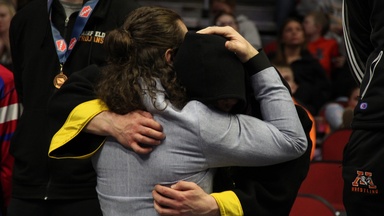
For Wirtz, the three main ethical principles a journalist must keep in mind when covering high school sports—or just sports in general—are accuracy, professionalism, and empathy. For him, empathy is particularly important when determining when—or when not to—pursue a story or capture a photo.
“When you interview high school athletes, you kind of have to be careful,” he said. “You don’t want to ask too much, but you don’t want to ask too little. You want to get your story, but you also want to be respectful to them, especially after their losses.”
Agreeing with Wirtz, Reiter emphasized the importance of taking time-and-place considerations into account; that is, especially when debating the capture of an emotional moment.
“You want to show the emotion that was there…but [acknowledge] when to stop and when to not shove a camera in a 17-year-old’s face,” she said. “Get the story without pushing too far, because I mean, it’s high school sports, and high school sports in general are very unregulated.”
All in all, Heine said that although this course made her step out of her comfort zone, she has grown as a journalist because of it.
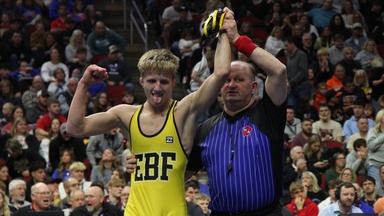
“The first week of class, I had an assignment like the next day,” she said. “I had no idea what I was doing, but it’s 100% worth it because I never would have learned how to do any of this without just jumping into it.”
Likewise, Wirtz expressed the value of hands-on JMC/SMC courses, even if it requires one to do something they are unfamiliar with.
“I would say that the value of these courses and other ones like it—in regards to getting outside of the classroom and putting yourself in these environments—truly is that you will be uncomfortable,” he said. “But you have to embrace the uncomfortability, right, because it’s going to happen in the future.
Reflecting on her experience in the course and if she would recommend it to others, Reiter said Prep Sports Report has made her feel more prepared for her career after college.
“I just think I’m so much more prepared on the backend to feel what it’s like in a real-world working environment,” she said. “I’m not [just] sitting in the back of the class and learning about how it’s going to be: I’m also going out and doing it.”
For more information about Prep Sports Report, feel free to visit the course website or view these students’ pieces through the Solon Economist digital newspaper.